

Blog
Supporting Transitions - Building Confidence Through Change by Stephen French
When we think about transitions in the early years, we often think about little ones starting school, however, transitions are woven throughout their daily experiences. From arriving at nursery, moving from play to mealtimes, or settling into a new room, children regularly experience changes that require them to adapt.
These moments can bring about excitement but also create a sense of uncertainty. That is why supporting transitions isn’t just about preparing children for a single event; it’s about creating an environment where change feels predictable, manageable, and positive.
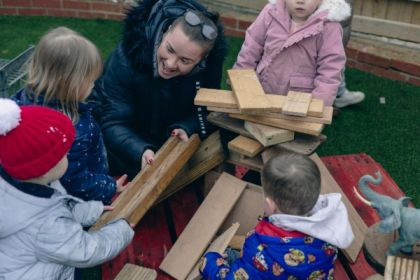
Research consistently shows that transitions should be viewed as a process rather than a single event and that, when managed sensitively, transitions help children to develop resilience, confidence, and positive attitudes towards change.
In this blog, I will be exploring transitions, their importance, and how thoughtful planning can help children (and adults) best navigate them, including how we support these at Kindred.
Why transitions matter
According to the Early Years Foundation Stage (EYFS) guidance ‘Birth to 5 Matters’, high-quality transitions recognise the importance of children feeling “known”. Children thrive when there is continuity between home, their key adults, and the different environments that make up their early years journey.
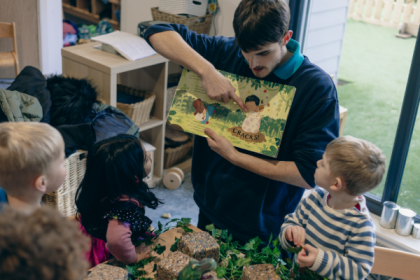
Whilst some children appear to adapt easily to change, for other transitions can be challenging. Children may experience uncertainty, anxiety, excitement, or a mixture of all these emotions when faced with something new. This is why transition support should always prioritise a child’s emotional wellbeing and be tailored to their individual needs.
Every child is different, some may benefit from a shorter transition period, such as when moving rooms, while others may need more time to build familiarity and confidence. Therefore, we firmly believe that successful transitions should be flexible, child-centred, and based upon strong partnerships with parents/carers and practitioners.
Transitions happen every day
As mentioned previously, focus is often placed upon the move from nursery to reception when we think about transitions, but in reality, transitions occur regularly throughout a child’s day and beyond, including:
- Coming to and leaving nursery
- Moving up from one room to another
- Transitioning to…
-
Mealtimes
-
Nappy-changes
-
Nap times
-
Toilet training
1. Coming to and leaving nursery
The transition from home to nursery can be emotional for both children and parents and this is why strong, respectful relationships between practitioners and families are essential in ensuring children feel safe and secure, making coming into nursery a smooth transition.
We know that parents and carers, play a significant role in shaping children’s expectations about nursery. Children often take cues from the emotions and attitudes of the adults around them and therefore calm, positive, and reassuring interactions can make a significant difference.
Whilst it is important to reassure children, it is equally as important to acknowledge and validate their feelings. Children need to know that it is okay to feel sad or worried whilst also being reminded that they are safe, cared for, and that you will return.
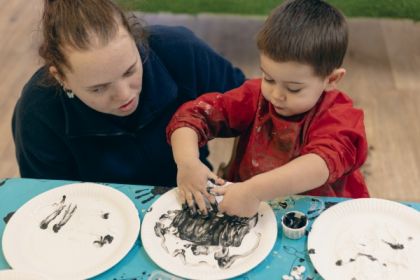
We wholeheartedly understand that coming into nursery can be a challenging transition for some children - sometimes to the point of crying or not wanting to let go of their parent/carer - and in these moments it may just be ‘easier’ to take your little one outside or even go home and forget about coming into nursery altogether. However, doing so can remove an opportunity for your little one to overcome challenging emotions and could make it more difficult for them to settle in the long-term.
We understand that saying goodbye at the door can be difficult and that you may wish to spend a little extra time reassuring your child. However, extended goodbyes can sometimes make separation more challenging for both children and parents. We therefore encourage parents and carers to allow our staff to support children as they enter the nursery, offering comfort and reassurance where needed. In most cases, children settle quickly and are calm before entering their room.
We know that these moments can also be challenging for you and that is why our staff will always try and update you with a message via Satchel to reassure you that your little one has calmed after a difficult drop-off.
2.Moving up from one room to another
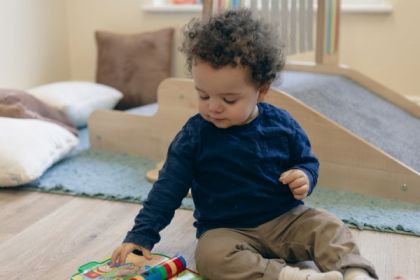
Moving to a new room is an exciting milestone, but it can also bring uncertainty. Familiar faces, routines, and resources can help children feel comfortable as they adjust to the new environment.
Developing a meaningful child/keyworker connection within early years is a core way children feel settled and confident within the nursery and this ethos travels with children as they move up from one room to another. This is why we encourage a flexible staffing approach whereby familiar faces, such as a child’s current keyworker, may spend time with the child in their new room ahead of their move.
We may also facilitate group settle sessions and group transitions, whereby children will settle and/or transition alongside peers - again, offering support through familiar faces.
We know that one transition plan will not suit all children which is why we adapt the transition process to meet the needs of the individual child who is moving rooms. In addition to what I have previously mentioned, this may also mean different lengths of settle sessions, from spending a mealtime, to half a day, or even a full day.
Some children may also be supported in their move from one room to another when accompanied by a comforter or familiar toy/resource these are particularly useful during sleep times, especially if a child already uses one for sleep times in their current room.
3. Mealtimes
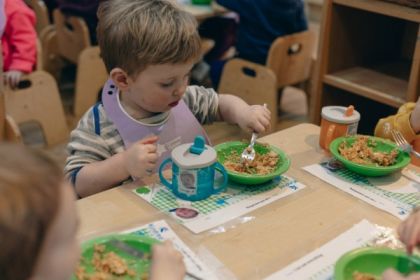
We respect children’s autonomy in deciding whether they are ready to sit for a meal and do not place pressure on children sitting for meals. More-often-than-not most children are happy to sit for a mealtime, however, for those that aren’t quite ready to join their peers for a mealtime or are ready to leave the table, we support them in taking this moment to be calm, such as with a book or sensory toys.
Children’s autonomy is the main reason why across our settings snack is served on a rolling basis, whereby children are free to come and join when they are ready. By offering rolling snack times, children are placed at the forefront of this transitional moment and can make their own decision as to whether they would like to move from what they are currently engaged with to having a snack.
4. Nappy changes
Nappy changes are somewhat different from other transitional moments in that it is something that must happen. However, as practitioners we work with children in navigating the transition from play to nappy change and back to play in different ways if they refuse to have their nappy changed.
Oftentimes, refusal to have a nappy change is centred around not wanting to relieve a resource - perhaps little one is busily engaged in racing cars around a track or drawing the next Mona Lisa and this is why we might encourage a child to bring the item they’re engaged with, with them as they have their nappy changed, comforted in knowing that their item of play is safe and can be returned to.
Other times, refusal for nappy change may be centred around autonomy of choice and/or control. If a child refuses the initial suggestion to have their nappy changed, we may let them know that we will change another child’s nappy first and then it is their turn to give them time to prepare. Or we will offer a different practitioner to help with changing their nappy and offer this in a clear, matter-of-fact way, such as “Who’s going to change your nappy? Practitioner A or Practitioner B?” By doing this, we affirm that changing their nappy is non-negotiable, but it has been offered in a way that still allows them autonomy of choice.
5. Nap times
Nap times are centred around creating a calm and safe environment in which children feel comfortable to sleep. From low lights, calm music, blinds down, story books and cuddles children are clearly given the routine cues to understand and prepare for naptime.
For those children that are not quite ready to nap, we encourage them to stay on their bed and take some calm time, such as with a story book. We allow our policy to guide us and therefore we will support a single child to get to sleep for a period of up to 10 minutes before moving to another child, understanding that this first child may not be ready, and returning to them after.
Children are never forced to sleep nor made to stay awake and in this we place the child at the centre of our practice - for those children that are due a nap but do not nap we encourage them to engage in some calm play as their peers continue to sleep.
6. Toilet training
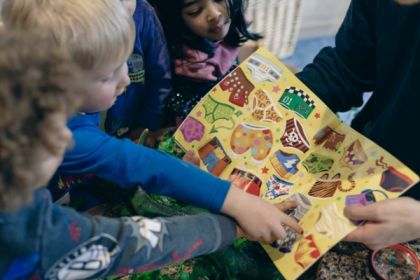
Learning to use the toilet is a big early year’s milestone and one that can daunt both parent and child alike and therefore we understand the importance of not only reassuring and guiding children with this but also parents and carers, too.
We are here to support the approach you take at home as a family and one of the first steps in starting this toileting transition is to begin asking children if they would like to use the toilet during nappy changes. This is often a supporting bridge between nappies and using the toilet allowing the children more autonomy in how they approach this milestone and can often be a good indicator as to the readiness of children in learning to use the toilet.
Throughout supporting little ones to use the toilet we uphold an approach that is sensitive and without pressure and with this in mind we follow children’s lead, irrespective of where they are at in their journey - this means that if a child declines to use the toilet or, indeed, requests to use the toilet, we honour this, understanding that these are indicators of their readiness in using the toilet.
There are a few things we have found that support the transition from nappies to using the toilet, such as…
- moving directly from nappies to underwear and forgoing the use of pull-ups, training pants, and potties - all of which add another transitional step to contend with during this process.
- stickers and reward charts to help children build a positive perspective of using the toilet and can be used as an incentive to visit the bathroom.
- encouraging children to help decorate the bathroom walls with pictures of favourite characters or shows, which can help break potential barriers and fears in using the toilet through making it a more familiar and personalised space.
Conclusion
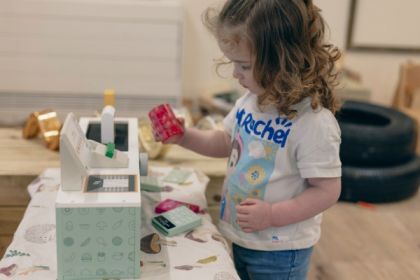
So, as I hope you can see, transitional moments are interwoven throughout a child’s days. They can be moments to build trust and resilience, moments to offer support & reassurance, and moments that give great insight into each and every child within our care. We understand that some transitions are felt greater than others and some children just fly straight through but it is with a consistent and affirming approach that children can feel supported and settled within these, whether transitioning from play to nappy-changes, lunch to sleep, or home into the setting.
Meet the Author
Stephen French
Hi there, I'm Stephen, one of our Group Leaders at Kindred Cambourne and have had the pleasure to work in early years for over 9 years now.

I'm passionate about creating inclusive, nurturing environments where every child can thrive, and have a particular interest in supporting children with additional needs. I'm also a qualified SENDCo and enjoy learning new approaches that can help every child reach their full potential.
Over recent years I've taken to writing blogs about all things early years, sharing these with our nursery's families & staff, which has given me the opportunity to reflect on my own practice & experiences and to share these reflections alongside ideas and lessons I've picked up in my time in early years. I hope my blogs provide helpful insights from everyday life in early years for parents and carers, while also offering something that fellow early years professionals can take inspiration from & relate to. But above all, I hope they reflect and celebrate the joy, curiosity, and importance of the early years.